Posts

Animals in Winter: Barred Owls
Image
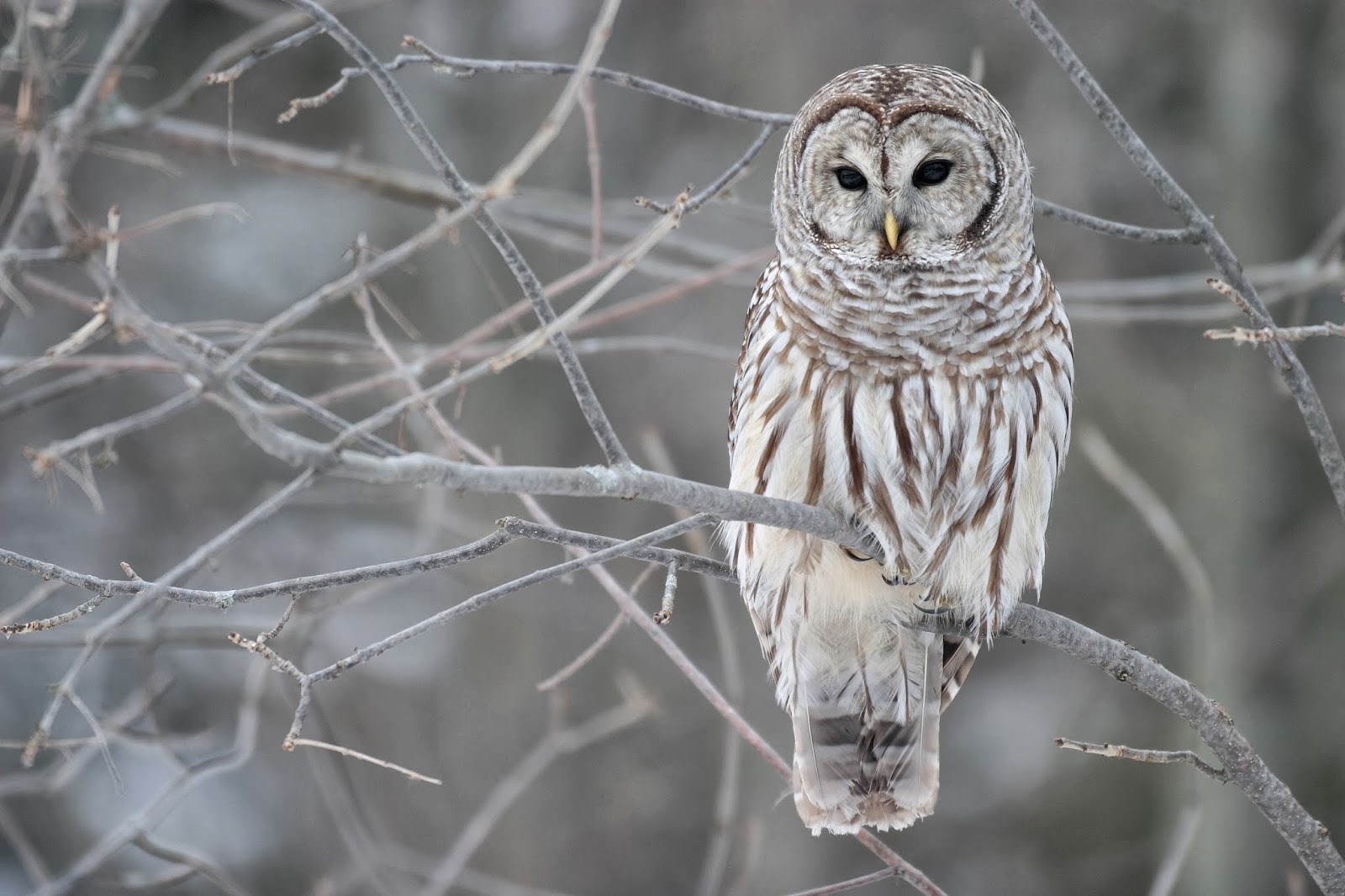
Photo courtesy of Vermont Fish & Wildlife Owls are everywhere in Vermont this winter! Snowy owls have migrated south from the arctic in search of prey, making this winter an irruption year. Snowy owls sightings have been reported statewide and across the northeast. But snowy owls aren’t the only raptors taking residence in Vermont this winter. The barred owl, Vermont’s most common, doesn’t migrate and populates the state’s forests all year long. Barred owls are grayish-brown with white stripes on their wings, back, and vertically across their belly. Unlike other owls in Vermont, they have brown eyes. If you haven't seen a barred owl, there is a good chance that you’ve heard one. They have many vocalizations including hoots, grunts, squeaks, and gurgles. Their most recognizable call sounds like, “Who-cooks-for-you? Who-cooks-for-you-all?” Female and male owls communicate during mating season in late winter by calling and responding to each other or vocalizing in u...

Knight Island Great Ice Celebration

Image
By Ashley Brisson, Grand Isle State Park Ranger On Sunday morning February 9 th , over 70 people made the journey across frozen Lake Champlain to visit Knight Island State Park . They came by foot, skates, skis, & sleds.  As they crested the snow covered shoreline near the ranger’s residence they were welcomed by a crackling campfire and Vermont State Park volunteers serving hot cocoa. The hot beverages were graciously provided by the local business Hero’s Welcome. The nearly four mile round-trip trek was part of the town of North Hero, Vermont’s annual Great Ice celebration. Adventurers took advantage of the thickness of the ice this year (2-3 feet), the recent snow, lack of wind, and beautiful cloudless blue skies. They walked around the trails of the islands interior, while others cross-country skied on the lake around island’s perimeter.  Nature abounded—fresh deer, turkey, mouse and fox tracks in the snow, while woodpeckers tapped and red squir...

Animals in Winter: Eastern Coyote

Image
The Eastern coyote is an important and relatively new member of Vermont’s ecosystem. They are highly adaptable mammals with a divisive history in the state. Coyotes began to appear in Vermont in the 1940s. Development in the western United States led to the loss of their habitat and they began to move eastward through southern Quebec and Ontario. It is believed that along the way they bred with the small eastern wolf. Photo courtesy of Seven Days Coyotes have reddish fur on their heads, with a grey face and dark muzzle. They have long, bushy tails and light fur under their chins. Their large body helps them to survive winters with heavy snowfall. Perhaps the coyote’s best known feature is their howl, which is often heard during winter nights. Their vocalizations are a form of communication that can carry over long distances. These sounds are used to let members of their family know their location after separating for a hunt. Sometimes coyotes howl to indicate to neighboring ...

52 Parks in 365 Days

Image
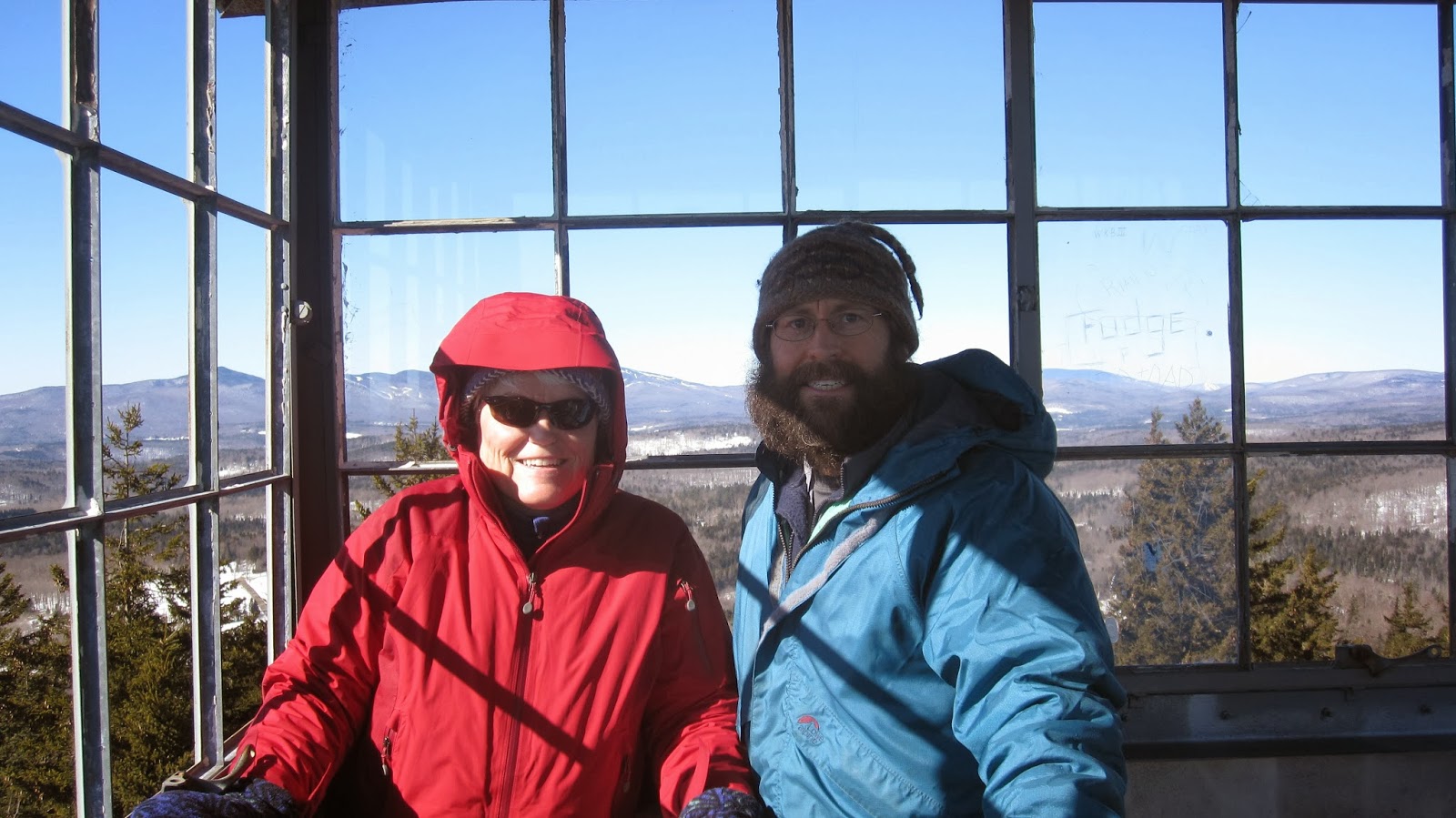
The Molly Stark State Park fire tower Every summer, people come from all over to visit Vermont State Parks. Return visitors are loyal to their favorite campsites and swimming spots and choose to come back year after year because of their connection to the park. Every park is different and offers an abundance of fun outdoor activities. Last winter, after receiving Vermont State Park passes as gifts, Vermont couple Anne and Steve set a goal to visit every Vermont State Park within the year. There are 52 state parks in Vermont, spanning the length of the state, and visiting all of the parks would mean seeing many during the summer months as well as during the off season, which begins in October. The couple began the challenge in mid-January 2013 with some cross-country skiing at Little River State Park in Waterbury. We asked Steve and Anne to give us some insight as to why they decided to embark on the state park challenge, how they did it, and to describe some of their favor...

State Parks in Winter

Image
By Eric Bouchard, Brighton State Park Ranger  Doug and his dogs Finn & Loki during one of  their frequent walks through Brighton State Park. Although the regular camping currently remains in-limbo until next season, it doesn’t mean that parks remain vacant and unused. It is not until one lives within the park boundaries in the off-season that one sees just how vibrant a park can be, even when it is closed. Despite a quiet fall, since the hunting season has ended and the snow has made its way to the ground, visitors have been coming in daily to take advantage of our park (Brighton), in particular, though I am sure it is similar at other state parks. People come in by foot, by snowshoe, by skis, etc, just to take advantage of all this wonderful place has to offer. The Donnelan family visit Brighton State Park.   The local communities hold onto and care for the state parks like they are a part of their own lives and heritage. The roads are groo...

Animals in Winter: Short-tailed Weasel/Ermine

Image
The adaptive short-tailed weasel/ermine is a remarkable winter animal. In periods of warmer weather, the weasel’s fur ranges from brownish-red to black, with white fur on their belly. As winter approaches, and daylight decreases, the weasel’s fur turns to white and serves as a type of camouflage in the snow. During this period, the weasel is known as the ermine, which means “white winter color” in French. The small but ferocious weasel is a skilled hunter. They are carnivores who eat primarily shrews, voles, cottontail rabbits, and rats. In the winter, the nocturnal weasel/ermine hunts beneath the snow where their prey may have burrowed to keep warm. They are known to store extra food or eat animals that are easier to catch like insects or birds if hunting is unsuccessful or food supplies are low. The weasel/ermine occupy home ranges that span 25 to 50 acres in a variety of habitats like wooded areas or grasslands. They are territorial about their home ranges and mark them b...

Animals in Winter: Beaver

Image
The beaver is one of Vermont’s busiest animals, so it’s not surprising that they don’t hibernate during the winter. The beaver is well-adapted to survive in water, with webbed toes on their hind feet and a tail that acts as both a rudder and a way to control their body temperature. Like the snowshoe hare, their young, called “kits”, are born fully furred and begin venturing outside on their own at about two weeks old. During the fall, beavers begin preparing for winter by cutting trees and constructing their dams and lodges. In the winter, beavers eat a woody diet of bark from trees like poplar, alder, willow, and cherry.  They construct their lodges from mud, stones, sticks, and branches and store their food supply in a large underwater pile within the lodge. It takes one ton of bark to feed a family of eight beavers for a winter.