Wednesday, July 29, 2009

Ride Guide "Vermont"

"Ride Guide" is a mountain travel TV series, where the hosts and guest pros, share their travels of skiing, snowboarding and mountain biking from locations throughout the world. "Ride Guide" is distributed into 60 million homes in 60 countries worldwide. Throughout Canada, Ride Guide airs on OLN, Rush HD, Shaw Video On Demand, Rogers On Demand, and Men TV. "Ride Guide" can be seen in 20 million homes across the USA on The Ski Channel. Ride Guide is broadcast into 55 countries throughout Europe on The Extreme Sports Channel and into 1 million homes in Australia on Fuel TV. Ride Guide is also distributed on-line through Dose.Ca, BikeMag.Com, and Norco.Com. We'd like to share a few clips from their Vermont edition with you.


Ride Guide "Vermont" - Segment 1 (East Burke / Kingdom Trails)


Ride Guide "Vermont" - Segment 2 (Pittsfield)


Ride Guide "Vermont" - Segment 3 (Killington)


Ride Guide "Vermont" - Segment 4 (Rutland)


To try these rides yourself:
Killington- Bikes can be rented at the resort. Since the trails are accessed by the ski lifts, you will need to wear protective equipment when riding. Camping is available nearby at Gifford Woods State Park.
The Pittsfield trails are also in this area; ask at the Pittsfield General Store for information. These trails start at the Amee Farm in Pittsfield.

Rutland/Pine Hill Park- folks can also camp at Gifford Woods or Bomoseen and can rent bikes from the bike shops on the Killington. For more information on the Rutland/Pine Hill Trails go to: http://pinehillpark.org/php/Pine_Hill_Park_Welcome.html

Kingdom Trails/East Burke- they can rent bikes at East Burke Sports, and the trails start right at the Kingdom trails office in the village of East Burke. Their website is http://www.kingdomtrails.org/. Camping is available at Maidstone State Park.


If your looking for a little bit calmer ride, check out these links for more information:


Wednesday, July 15, 2009

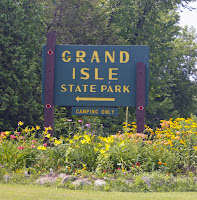
The Flowers of Grand Isle State Park

Have you ever wondered who cares for all the plants in Grand Isle State Park? Or even where they all came from? Maybe you are just interested in flower gardens no matter where they are. Click below to read Doris Sless' story of Grand Isle's flower gardens and one woman who tends them.

Summer Trip to Grand Isle
Last summer Gary and I camped in Grand Isle State Park, outside of Burlington, Vermont. After setting up camp we walked around the grounds, noticing many beautiful flowers in the woods. I have never seen such beauty in a campground. Within a day I spotted a woman on hands and knees, tending to a group of native flowers. I figured she was the person responsible for all this natural beauty, so started a conversation with her. I was very impressed by her dedication, showing what one person and a love of nature can do.

This is Kim Jackson’s story:
“I first started working here 3 years ago in the butterfly garden, planting mostly annuals that first year and now, finally, the perennials are starting to show off. We have the basic plants such as butterfly bush, butterfly weed, salvia, phlox, Jo Pye weed, etc., and plants to attract hummingbirds such as trumpet vine and scarlet runner bean. The favorite plants of butterflies seem to be purple coneflowers and a catmint, “Nepeta Walkers Low”. I planted that when it was about 4” tall but by next spring it grew to a 4’ by 4’ bush-- pretty amazing. We had a Shasta daisy “hedge” along the front of the garden but it grew too tall and full, blocking the garden, so I had to move them outside the garden border.

Most of our plants are grown for us by a program at the St. Albans Correctional Facility. There is a greenhouse program that teaches inmates job skills that can be used when they get out. It had been a men’s prison up until now but is being switched over to a woman’s facility in the next year. In this program plants are grown for 9 state parks in this region of Vermont, and for several town gardens as well. Last year I was able to give them seeds for the perennials grown and have already selected seeds for next spring. We received about 22 flats of annuals and 24 flats of perennials from them. After giving to other towns, we got the leftovers, about 24 more flats! There is also a commercial greenhouse near us that shuts down after July 4th, when they let us come and take any leftover plants--mostly annuals, but this year there were about 40 lupines and a few other perennials. Grand Isle Park consists of 156 campsites sitting on 225 acres. We used annuals around the 5 restroom buildings and office, and the perennials in the theme gardens. In addition to butterfly gardens we have an 80’ long daylily bed, a 100’ long bed of lupines and Oriental poppies, followed by black-eyes Susan’s, a sunflower bed, a woodland area, several shade gardens and a rain garden. The rain garden is at the bottom of a hill, which is fairly wet all summer. On this website about rain gardens you can print a really nice manual: http://vacd.org/winooski/winooski_raingarden.shtml.

Our next project is an area of only native-Vermont species. Basically I do my job in the morning then get to play in the gardens all afternoon. One of my main interests is improving the soil. Our soil is made up of heavy clay so I’m able to get truckloads of lakeweed from nearby state park’s beach. Lakeweed has a lot of sand sticking to it, so combined with the leaves I rake, and with wood ashes from our campers’ fires, the soil is constantly improving.”
Kim Jackson, Grand Isle State Park
-Doris Sless


Monday, July 6, 2009

Take a Virtual Nature Walk


In an effort to make it easier for you to "visit" some of the features of our state parks, we've put Burton Island's North Shore Nature Trail on-line, complete with color pictures and text from the brochure.