Saturday, February 28, 2009

Volunteering in Vermont State Parks Why Volunteer? Jackie & Jim Garrow Tell Their Story

Everyone who has volunteered knows the obvious rewards - self-satisfaction and the feeling that you've made a positive contribution. My husband and I had logged a few volunteer hours before retirement. In addition to school, church and community ventures with our children, over the years we also worked with Habitat for Humanity, veterans groups, special needs kids and HIV/AIDS babies. So when we retired and became full-time RV-ers, it seemed natural to continue donating time to a worthy cause. That's how we connected with Vermont State Parks' Volunteer Program.
Like most state park systems, Vermont Department of Forests, Parks and Recreation relies heavily on volunteer assistance. Your contribution can be as varied as your individual skills, talents and interests. We chose to live in our RV onsite in exchange for 30 total hours per week commitment. So how has our experience been and what can you expect if you volunteer?

Great People
We think park staff are pretty special folks. Whether career public servants, second-career retirees, PhD's or students, we found one thing in common - they love the land, and embrace their mission to preserve Vermont's cultural and natural resources. If you like meeting people, you'll also enjoy greeting visitors or helping with park programs and events. We made some great friends, and got to use our extensive customer service experience.

Interesting Places
Each park is a unique and exceptional gem to appreciate. Lovingly preserved historic structures, deliciously challenging hikes to "secret" places, awesome wildlife encounters, beautiful beaches and boating adventures are all part of the Vermont Parks experience. Volunteers are admitted free to Vermont parks and state-owned historic sites. With more than 50 parks to see and explore on off-duty days, you can see why we keep coming back!

Learn and Grow
Park operations are anything but boring - a typical day can include accounting, facilities and trail maintenance, interpretive programs, research for history or nature programs, visitor registration, or even teaching first-time campers the fine are of constructing s' mores. If you can't learn something new in this environment, you are my hero! In a complex operation like a park there are always chores, but there is also time for you to pursue projects that suit your personal interests.

Make a Difference
We all know the good feeling that comes from working hard toward a meaningful goal. We found great satisfaction in performing maintenance to protect structures built in the 1930's by the Civilian Conservation Corps (CCC in Vermont State Parks), or planting flowers and trees that will please park visitors in the coming years. I like to believe that every volunteer hour donated in a park results in hundreds of hours of future enjoyment. Consider how the vast total legacy of volunteers in Vermont State Parks must be!

Living in a Park
Why do you camp in the first place? Imagine that "home" for your volunteer commitment is a place you'd choose to visit on a camping trip. Enough said.
Other perks of the volunteer program include: partial-to-full hookups at no charge; propane gas as needed; uniform shirts and identification; other discounted admissions; and, recognition (we really do love a pat on the back now and then, don't we?).
All in all, we have enjoyed a positive experience as Volunteers in Vermont State Parks. For more information, check out our Volunteer Opportunities page or contact our Volunteer Coordinator . Maybe we'll see you soon-
Jackie & Jim Garrow,
Volunteers in Vermont State Parks

Monday, February 23, 2009

A “CCC Boy” Comes Home: Walter Edmonds revisits Mt. Ascutney

Seventy years have passed since Walter Edmonds, now 88, spent a year working on a crew building the toll road at Mt. Ascutney State Park in Windsor. Edmonds enlisted in the Civilian Conservation Corps. in May, 1936 at age 17 on the advice and recommendation of a high school teacher a year before he was due to graduate. "My gosh, this was all a meadow," said Mr. Edmonds, looking around the park entrance, now surrounded by 80-fot tall white pines. "Barracks #1, where I bunked, was built right over the stream there. It sung me to sleep at night." Edmonds spent a misty day in September, 2006 visiting with park staff and telling tales of camp life and work on the mountain. Mr. Edmonds and his daughter Debbie were treated to a buffet lunch and give a tour of the present day park.


Mr. Edmonds spent a year with the CCC, starting out on the toll road “making small rocks out of big ones” swinging a sledge hammer, then moving on to the survey crew that laid out the trail system. He shared many stories of camp life, the life-long friends he made there, and how his experiences shaped his life. “Everyone remotely connected with the CCC was doing themselves a big favor, and also the country, by educating themselves,” said Edmonds, referring to the program that put millions of young men age 16 and over to work on public works projects during the Great Depression. By working in the rugged setting, he became familiar with the birds, trees and fish native to the area. A boy from Boston such as him would not have had such an opportunity, he said. Compensation was $30 per month; $5 went to the corps member, the rest was sent home to his family. The pay plus the promise of ample food and a roof over one’s head was seen as a good deal.

Mr. Edmonds described a scene of hard work and camaraderie at the park. Corps members were fed 3 hearty meals a day, performed 8 hours of work and took on duties assigned at the camp. The largest crew at the park took 5 years to construct the toll road which involved blasting, breaking by hand, and moving hundreds of thousands of cubic yards of rock and fill. Progress was made at the rate of up to 60 feet per day. Another crew spent 3 years constructing park facilities out of native Ascutney granite. A third crew did survey work for the road and trail system. Work continued year round when possible, through extreme cold and heavy snow, but never at breakneck pace. “Everybody worked hard, and no one was pressed for time,” Mr. Edmonds said, illustrating that they were given ample time to do the job correctly.
The program was a unique mix of civilian and military personnel. Civilian corps members worked on crews supervised by state and federal government engineers, and US Army officers oversaw camp life.

This wasn't Walter Edmonds’ first visit back to the park; he returns regularly to drive up the toll road and to hike the trails. He maintains his top physical shape by getting out regularly and even hiked to the summit of the mountain earlier in the summer. On this visit, staff honored him with a luncheon and a card of appreciation. Mr. Edmonds plans to keep returning to the park on a regular basis. He summed up his experiences in 1936-37 as “the happiest time of my life!”

Come Into the Forest by Lisa Kirby

Groton State Forest offers a multitude of recreational opportunities

Come into the Forest and you will see how to spend time more leisurely. There’s something for everyone at Groton State Forest in northeastern Vermont. Whatever season of life you are in you will find year-round fun in the Forest. Pack up the car; grab your fishing pole, camera, bike or a book; leave your cell phone at home (it won’t work here, anyway) and take a step back in time where life moves at a slower pace.

Groton State Forest, over 26,000 acres of new-growth forest, is just one of the many areas managed by Vermont’s Department of Forests, Parks and Recreation for multiple uses. Located in the southeast corner of Vermont's Northeast Kingdom, the Forest is sandwiched between Route 2 in Marshfield and Route 302 in Groton. Full of a variety of flora, fauna, wetlands, and mountains, the Forest is a fun-filled, fabulous place to visit. Groton State Forest provides not only valuable natural resources such as timber and wildlife, but also an inordinate amount of recreational opportunities all year long.


Since the late 1800s, people have been drawn to the area to pursue various leisure activities. Fishing and camping during the spring and summer and hunting and trapping during the fall and winter. Not much has changed today. The main exception is their mode of transportation. Instead of the loud, smoke-spewing Wells River-Montpelier train chugging through the heart of the Forest, people now access the many trails and campgrounds via Route 232, the road started by the young men of the Civilian Conservation Corps back in the 1930s. For just a dollar a day these men came here to work, financially assisting their families (their families received $25 a month, the men kept $5) while conserving and protecting our nation's resources. Remnants of their work still exist today. They built pavilions and fireplaces for the public to enjoy. They helped in reforesting the Forest. The men of the CCC were vital in making the Forest what it is today.

Nowadays, people of all ages and abilities can enjoy the beauty and serenity of Groton State Forest. So many, many opportunities await you and your family or friends. Take the kids for a swim at Boulder Beach State Park. Hike or bike along the nice and level Rail Trail. Enjoy the panoramic view of the Forest from atop Owl’s Head. Explore nature on your own or join in exciting activities with the knowledgeable naturalists at the Groton State Forest Nature Center. Watch out for moose or listen for loons, just a few of the fabulous critters inhabiting the Forest. Summertime is full of the hustle and bustle of hikers, bikers, boaters, fishermen, photographers and campers.

The Forest offers a varied selection of campgrounds. Ricker Pond, Stillwater, Big Deer and New Discovery all accommodate tents, campers and RV's. Swimming and boating are also available at Ricker Pond and Stillwater. New Discovery has horse camping and remote sites for those who wish to get away from it all.
Looking for a quieter experience? Try late spring or early autumn camping. The campgrounds are open, the kids are in school and you will get your choice of prime sites. If sleeping on the ground doesn't intrigue you, there are also cabins available in the Forest. For the less hardy nature lover or the fly fisherman, give Seyon Lodge a call. Seyon Lodge, on Noyes Pond, is a bed and breakfast type facility that is open year round.

Autumn is a quiet time in the Forest. The crisp, cool air is perfect for hiking. Remember to dress in bright colored clothing when hiking in the fall. As the leaves fall and the campgrounds close, the Forest opens up for hunters. Hunting is a tradition that dates back to the beginning of time. It’s a way to keep the herds healthy and families fed.

As the days grow shorter and the snow flurries fly, the Forest is once again alive with activity. Snowmobiles travel along the VAST trail. Cross-country skiers glide along the freshly fallen snow. In the distance you may hear the excited yapping of a dogsled team getting ready to leap and bound over the frozen ground.

Within Groton State Forest you may find a quiet spot to reflect or a place bursting with excitement. You may find the perfect photo op or the perfect fish. Whether you want a family reunion or a lovely get away, remember the Forest. Whatever the season, whatever your reason, come into the Forest and reconnect with life. There’s something here for everyone.
For more information on Vermont State Parks located in the Groton State Forest check out these links:

Big Deer State Park
Boulder Beach State Park
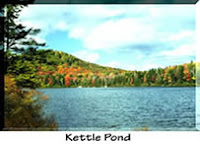
Kettle Pond State Park
New Discovery State Park
Ricker Pond State Park
Seyon Lodge State Park
Stillwater State Park

Bridging the Gap: A Legacy of Stone Work

For two weeks this July the Vermont Department of Forests, Parks, and Recreation’s seasonal State Trail Crew marveled at the work of the Civilian Conservation Corps. (CCC), not as observers, but as those who were bridging a 75 year gap. All the projects that the crew is undertaking this summer are in some way linked to the spirit of the CCC, but none as directly as installing an interpretive panel on top of Owl’s Head Mountain in the shadow of the intricately built stone hut.

Owl’s Head Mountain is situated in the heart of Groton State Forest. It’s 26,000 plus acres, riddled by trails and specked with State Parks, makes Groton State Forest a gem for recreating and enjoying the outdoors. Driving down Boulder Beach Road, as you near the entrance of Stillwater State Park, your eyes are drawn north by the view and little imagination is needed to understand why Owl’s Head was given its name.

In 1935 the CCC completed building a crown for the top of this haystack shaped rock. Many say that the granite which comprises the mountains and was dropped by glaciers across the landscape is the forests second most bountiful resource, others scorn their presence. They are likely the number one reason that the forest was not developed and hence turned into State Land. The granite is also a building material that lasts the ages. These are two major pluses for the rock. The down side is it is heavy and hard to work with. These challenges were over-looked by both the CCC and the State Trail Crew.

For five years interpretive information has been developed for Groton State Forest. This interpretive information was developed and fabricated on signs placed in strategic locations throughout the forest giving visitors a better understanding of their surroundings. The last stage has been the installation. Great effort has been taken to match the structures holding the signs with their surroundings. When deciding on the material to use on top of Owl’s Head it is almost obvious that it should be rock. When you crest the mountain the first thing you see is the stone hut, then with further observation, hidden in the brush you can see the cast away rock that did not fit into the puzzled together hut. These cast-a-ways bear the scars of the drill bit, making it very apparent that they were being manufactured for a purpose. After sitting for 75 years we decided to complete the circle and use them to create a holding structure for our interpretive panel.

The crew consisting of Owen French, Andrew Pinault, and Alex Kopista went to work under the heat of the sun and the all too often drenching down pour of the summer rains. Rifting lines across the granite rocks to loosen up the granite’s speckled particles with shock waves given off by the hammer’s ridge line. Hammer hit after hammer hit ponds a memory into the rock making it easier for the crew to split it. Then along this line drill holes, usually a half inch diameter were placed approximately six inches apart, deep enough to insert the feathers and wedge. The feathers are two pieces of metal that the wedge pushes against in order to put pressure on the inside of the drill holes causing the rock particles to release their bond along the line that is rifted. This is the method that was used to manufacture the rock into the needed shapes, a method that has not changed much since the CCC split rock on top of the same mountain. Once the rock was the right shape the crew drilled through the center of them and skewered them along pieces of one inch diameter stainless steel rod, pinning the columns to the bed rock next to the stone hut. Then a fabricated metal bracket was bolted to the columns allowing the interpretive panel a place to be bolted to as well. For the last three days of the project the crew would wake up at the campsite feeling that today would be the day, the project would be wrapped up. Each day unexpected challenges would arise until the last bolt was tightened and the crew member’s tired muscles carried them away from the creation to allow a look at the finished product: a holding device that matched the character of the stone hut, would withstand the test of time, and would hopefully make the CCC proud.

2008 Park of the Year Awards

Each year four parks, representing each geographical region in Vermont, are presented with the Park of the Year Award. The purpose of the program is to acknowledge exemplary accomplishments of the parks field staff, as well as for the enhancement of public service – to make the parks a better, more enjoyable place to recreate. Competition is fierce and award recipients receive the right to display the coveted "Park of the Year" banner the following season. This year's winners are Thetford, D.A.R., Niquette Bay, and Little River.

Old-Growth Forest Exhibits Now Open at Gifford Woods State Park

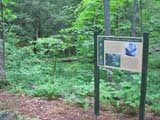
1 Killington- a new series of outdoor interpretive exhibits are in place on the Old-Growth Interpretive Trail at Gifford Woods State Park. The exhibits explore the natural and cultural history of what is probably Vermont’s best known and most accessible remaining old-growth northern hardwood forest. The six exhibits are located along the trail and detail characteristics of the old-growth forest, old-growth trees, and development of the park around this unique natural resource. The exhibits complement a self-guiding trail that includes a brochure and plant and tree identification plaques. The exhibit project was funded by a grant from the Vermont Recreation Trails Fund.

Gifford Woods State Park, on Route 100 North in Killington, was established in 1931 and includes camping, hiking, picnic grounds and interpretive exhibits and trails. The park is open to the public from Memorial Day weekend to the weekend after Columbus Day. Day fees are $3 per adult and $2 per child. For more information, please contact the park at (802)775-5354.